Monday, November 16, 2020

Responses to Karmel and also Flusser's articles


Karmel and also Flusser's articles


Thomas Demand works in a replica of the places that he heard about them by books, history, and media. For example, Demand's re-creation of the military conference room, the united states president room, and other his works are not a real place. They are fake locations that are not real for him and his audiences, and neither of us believes it. From my point of view, authenticity and mystifications are those meanings that he is looking for in the concepts of history.

He is challenging with stillness and reproductions meanings. He tries to show stillness and presents all moments simultaneously, without human. Even in the assassination’s moment in the Hitler office, his work has a paradoxical meaning with history and we can see the peaceful time, not the explosion mass. We have two groups, first people who see his artwork in the gallery and people, like me, who see the work by websites, and in this scenario, we are in different levels of understanding.  Second, we all are on the same page and our understanding of the Hitler office came from text and old footage. It is possible to say the concepts of Hitler office for all of us is fake.


Original sculptures or stages objects by Thomas Demand are unique, but after taking photos they are become fake for both of us, for him and the audiences. They look different from how they look on the computer screen and websites, in one word, reproductions distort. Even his facsimiles in the gallery are fake too. Look at his works in the gallery by websites, what you are seeing is still not the original. Even the people in front of it can not say they are seeing the original. Then his photos can not be authentic until we consider it as an object. Now his photos for viewers in the gallery are real but internet surfers are still fake. The meaning of authenticity links to our definitions of objects.  In Flusser's articles, he tries to have a classification by definitions of objects. It is about a prediction of artworks in the future. In the not far inaccessible future, images will become pictures showing up on electromagnetic screens. They will delineate a future culture of unadulterated, insignificant data, one in which society will be occupied with expounding what is presently called 'programming'. 

Finally, Uneducated people, until they are educated out of it and are forced to accept mystifications look at images and interpret them very directly. The connect any image whether from comic, news, advertising directly with own experiences. So I sowed them some works of Thomas Demand and they told me it might be a page of furniture’s advertising.

Saturday, November 14, 2020

Thomas Demand, Real Simulation, Vilem Flusser- Photo as Object and John Rajchman, How to Construct The History of Exhibitions


                                 The Real Simulations of Thomas Demand

Thomas Demand makes art in the context of historical events such as war and socio-political issues with the medium of photography and sculpture in a very subtle way. Like Peter Fischli and David Weiss, Thomas Demand stages a sculpture in a form of an unconscious environment and photographs it. In his work Bruno Office, 1996, Thomas displaces blank paper on the floor and table, within an office as a response to the fall of the Berlin War where numerous people were informant. It is fascinating that Thomas instead of him to show photographic images, he rather takes away the evidence of those informants and still maintains the fact that papers hold the great source of memory and  the collective history or image of the society is attained through paper.
Office, 1995


                                        Photo As Object by Vilem Flusser

In the essay Photo As Object, the Vilem Flusser (1986) mentions that humans take upon themselves to preserve memory through photography. The author referenced apparatus as a machine that helps one to manipulate an original object or filter a decision. The apparatus then becomes a critical strategy through which one could create an idea. In the text, he distinguished between the cultural object and the industrial object that the cultural objects already have their shapes or forms and to change them, one needs to understand them before the information that objects carry could be manipulated thus based on the context of the theora whereas the industrial object is based on the praxis, which takes the involvement of experiments and practical evaluations for the user to better understand the function of the object for instance a machine.


                                    Les Immatériaux or How To Construct The History of Exhibitions 

 Jean-François Lyotard  discussion of exhibition references Immanuel Kant’s theory of aesthetics by  creating a dialogue between art and philosophy by analyzing strategies as way form significant history. According to John Rajchman (2009) Les Immatériaux explores new ways of understanding the role of the artist in terms of her/his work in the studio and what the white cube space does to the new work. The decisions that artists make in the process of producing art is mostly the fact of recreating history or creating history. The contemporary art as a culture has expectations of new ideas and strangeness of experience achieved by the audience. 


                       Untitled, 2017 (Exhibition After Life Ahead, 2017)

For instance, Pierre Hughes exhibition After Life Ahead, 2017, the artist created an exterior environment in an enclosed building in Germany. In the building, the viewers are exposed to multiple elements organic and inorganic to be viewed at the same time. It is an empty space and a yet a place full of logical components which create an ideological existence of self within the space through the critical presumptions of the technological and systematic process of those elements. The viewers may feel themselves from exterior to another exterior environment and yet only the wall brings to the viewer, the consciousness of the interior.  An exhibition such as Pierre Hugges's After Life Ahead develops the discussion of an exhibition space in a historical disparity between the modern and post-modern period, emphatically on the white cube space. 

Thursday, November 12, 2020

Damrill_Flusser/Demand_Response

Flusser Response


This author makes a valuable distinction between photographs and objects. Both about the importance and unimportance of each. Flusser deems photographs to only hold information on the surface rather than in the body as objects do. Though if the photographs content hold something of historical significance, of an object that no longer exist, they become important objects as they hold the only essence that object has left. I also am interested in the explanation of an apparatus. This device being a machine that elaborates information. The author refers to an apparatus as a machine that calculates probabilities. He compares this to when human creates and is filled with experiences. These experiences equal intuition when man can predict possibilities. Though this author describes that an apparatus can do this better thus leading to a loss of information for man kind. 


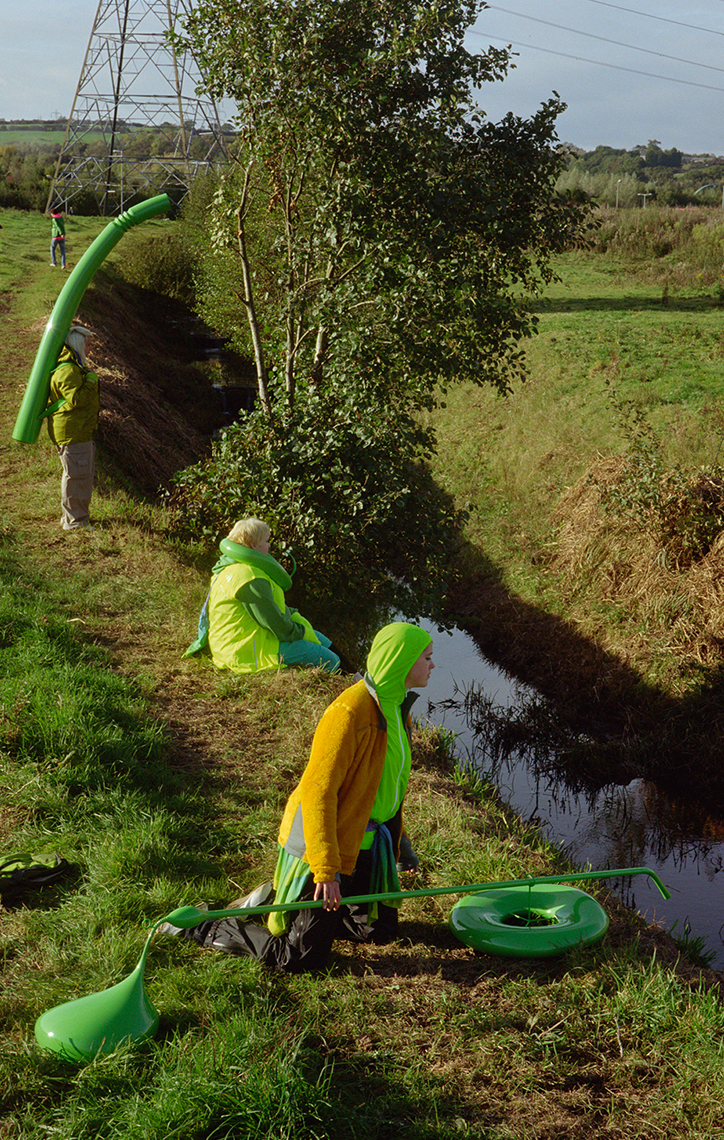
    An artist I believe relates to this writing is Dunne and Raby who use objects or "apparatus's" to bring about thought provoking work. Then the artists uses photography to document these objects.


Dunne & Raby | Domaine de Boisbuchet 


Thomas Demand Response


Demand uses photography to create an alternate reality. A reality that reveals the traces of humanity without showing people creating it. His work is fake and meticulous. Constructed worlds that are loaded with meaningful commentary on events or historical situations. In one photograph, the artist takes Jackson Pollocks studio and omits Pollock himself, his wife and any from of art associated with the artist. This author states that the piece portrays a chapel of sorts “sanctified by light.” This artist utilizes the thought provoking spaces and specifically draws his art from those sections or areas. 


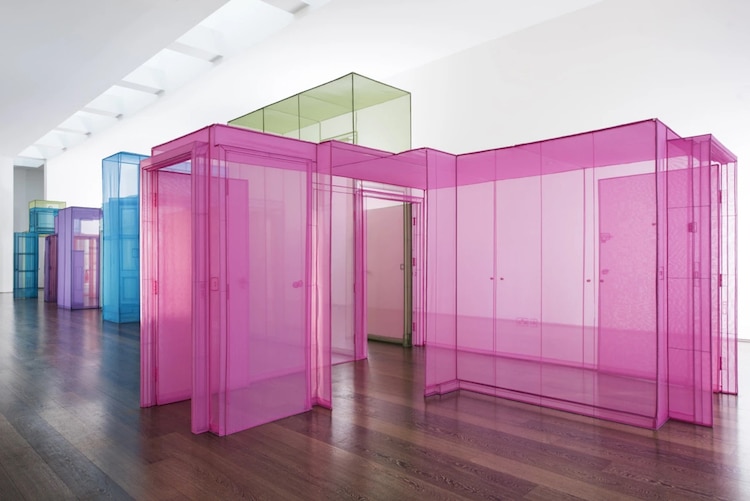
    An artist I believe relates to this writing is Do Ho Suh's installations where he perfectly recreates the internal structure of various rooms and buildings. I believe that taking the essence of a space brings the emotions and memories of that space.


 do ho suh victoria miro gallery 

Thursday, November 5, 2020

Speculative Everything: Design, Fiction, and Social Dreaming \ response by Chandler Damrill

Speculative Everything: Design, Fiction, and Social Dreaming \

Chandler Damrill


“They help us think about alternative possibilities–they challenge the ideals, values, and beliefs of our society embodied in material culture.” 


These works of fiction and of alternate realities bring attention to problems people wouldn't be able to fix otherwise. It does not matter whether these art objects can actually solve the problem it was created to resolve, the important function is that it brings attention to a problem mankind needs to fix. The role of the prop maker, whether it be through movies, photography, sculpture or design, is to bring the expanse of “what could be” to the viewer. “The speculative prop designer needs to be skilled at triggering an imaginative response…” There is no set placeholder for these designs and speculative props, that’s what makes these objects stand out. Within this new world that the artist creates, the viewer sets aside all possible things and opens up to the impossible. This is a place for the viewer where I believe the art can truly teach. Shifting the role of the viewer from spectator to having an active role in the piece itself. 


“…Fooling the viewer into believing something is real is cheating. We prefer viewers to willingly suspend their disbelief and to enjoy shifting their imagination into a new, unfamiliar and playful space.” 


To me, when it comes to art objects in this category, a viewer should have the same mentality walking into a gallery space as they do walking into the movie theater. Once the viewer understands that they are entering into a space beyond reality, the artist can communicate at a different level. This space allows the viewer to actively imagine greater possibilities than their own, thus pushing them to wonder away from their own personal belief systems that could potentially hold them back in these situations of viewing art. “They must be plausible but not necessarily believable.” When the artist creates a consistent environment within their pieces, the viewer can enter into the world much like cinema. 


I personally connect and am inspired by Dunne & Raby. The designs engage with the viewer in a truly interactive and imaginative way. The visual language asks the viewer to ponder what the devices could be used for. The artists then use their work in photography with people in the act of using the devices they have created. After seeing these photographs and then being able to see the physical object in front of you truly pulls a the viewer into a dimension of the possibility that these artifacts and tools exist on their plane. Much like the movie goer can see the lightsaber in which Luke Skywalker uses to defeat his enemy. This brings out a sense of excitement because of the investing that certain viewer has done towards Star Wars. In the same way, the works of Dunne & Raby speak in multiple languages, in turn, I believe, creates a deep connection with the viewer.       

 Speculative Everything: Design, Fiction, and Social Dreaming 

 By Anthony Duane and Fiona Raby


2013


The authors discuss that the process of creating scene to reflect on the engagement contemporary viewers in exhibition space is experimentation of ideas that will the lead the viewer’s imagination into speculated spaces which could be real or unreal(pg 137). In the context of the speculative design prop, film was used an example because it has the capability to place the viewer within an imaginary space. Before I watch film, I already understand that the experience I would get in the film is not real, yet the film captures my consciousness which make me live within it and believe in the fiction with all its highest level of suspense and other aestheticized features. 


Film could be a virtual experience or a future space or a non-place. When I watch film, I tend to believe in the spaces in the scenes to exist, where I become the viewer who imagines the reality of the space. I have not physically experience but understand that it forms part of the world. This speculative design is inspirational because when I make art especially by transforming the found objects, it evolves my curiosity to understand that the sculpture is the original function of the transformed material. 

René Laloux’s “Fantastic Planet” 1973 


In this case of achieving experience, there is some sense of strangeness that is incorporated into the work which triggers the viewer consciousness to live closer and deeper into the work. The authors analyzed that photography is a good medium that unveil hidden realities in odd environments. 


Jasmima Cibic 
Ideologies of Display (Tyto alba), 2008, Lambda Print 120 cm x 120 cm


There are also constructed space where the authors talks about, as the ideologies of display. I find that very interesting in terms of the artist Jasmima Cibic's decision of engaging the viewer. In the picture Tyto alba, 2008, there is an owl in front you but and not only do you see the owl but also a constructed space with elegant abstract design which gives you a simultaneous experience within a single photograph.


Monday, November 2, 2020

Reading Response George Lucas, THX 1138/Jørgen Leth, The Perfect, Human, 1968


George Lucas, THX 1138, (1971)

Jørgen Leth, The Perfect, Human, 1968


There's a suspicion with theoretical work that it is situated toward the future, but it can essentially be someplace else, a parallel world to our own rather than a conceivable future. Once you drop a long-term viewpoint of speculative work you immediately broaden the scope for aesthetic experimentation and innovative depiction of elective substances. One of the most well-known cinematic nonplaces is the tremendous, white space of George Lucas’s THX 1138 (1971). It is the model of future space or nonplace. But white does not continuously need to flag the long run. It can moreover propose we are watching a few kinds of try; possibly indeed a thought explore. In Jørgen Leth’s test film The Culminate Human (1967), a man, lady, and sometimes both associated with essential props to illustrate crucial human exercises such as eating, resting, kissing. In this film, the empty white space is a nonplace instead of a representation of the future. In each case, the chief makes no endeavor to build a detailed world, but instep gives a clear canvas, a “white box” onto and into which viewers can extend their claim thoughts.

They both have a definition of non-place. The definition of modern places in the super modernity is like what Marc Augé says in his book. And I am using the same definition of super modernity in the center of my recent work (Table). The emptiness in the center of my work is in the contrast with the accumulation of images around the center. I am trying to boost the notion of documentary photography. The chronology by images in news and media has been affected by the avatar and simulation. Using images as an object for controlling society leads to a new model of fraud. This kind of method for historiography emerges a new version of documentation according to the taste and not reality.


Saturday, October 31, 2020

Reading Response, Gillian Wearing, Katharina Fritch and Erwin Wurm


The Many Selves of Gillian Wearing

She talks about social media in terms of how that is involved in our everyday activities and we are also always expecting to see new things happening. We perform the duties of liking and disliking the information we encounter and we desire to also have followers as part of life achievement. Wearing said she does include her life into her practice. She goes through her old pictures taken by photo booth camera and the recreate the same posture to compare the difference in time. It is interesting that that she uses photography as reference to her past as she tries to feel the progress of her life.

Thinking in Pictures Katharina Fritsch In Conversation with Susanne Bieber

I find it interesting when Katharina said that cloth is a very subject but not really regarded. She added that cloth could be a great a medium through which one’s status or identity could be shown. In her work uses mostly the male model as a way to explore her way of women rights because she believe that the female body always been a male’s sexual gaze but Katharina tends to twist the narrative in the opposite way. When she sketches her before she does her work she mentioned that she rather takes photos of Frank by record him in the right position. I found that interesting in relation to photography and sculpture where she uses photography as a process of sketching a model.

Photography Knocks At The Door Erwin Wurm in Conversation with Max Hollein

 Erwin Wurm’s practice is both a combination of sculpture and photography in the sense that she uses sculpture to explore photography. In her photographs, the figures pose as if they were sculptural pieces. What is also interesting about her work is that she stages the model take the photographs. In the interview, I realized that realized that Erwin uses her work to raise question sculpture but with the help of photography. She is more invested in her practice and she responds critically to art history movement and yet separates herself to explore new theories that inspire her work.